Praha 4 - Podolí, kostel sv. Michaela Archanděla Back
Information
The Church of St. Michael the Archangel is mentioned as early as 1222 as the property of the Vyšehrad Chapter. The rectory in Podolí is mentioned, for example, in 1357, 1380 and 1410, the patronage of St. Michael is attested in 1372. The church is probably of Romanesque origin, and has survived to this day as an early Gothic single-nave church from around 1275, rebuilt around the second half of the 14th century, and then again in 1485-86, around 1696, and finally completely renovated in the Neo-Romanesque style in 1887 according to the design of Matyáš Krch. Since 1856, the Podolí church has been a parish church with an independent spiritual administration for Podolí and Dvorce, and until 1907 it was also the parish church for Braník.
There is a memorable wooden bell tower from the 16th century, which is very rare in Bohemia. The bell tower is prismatic, perhaps late Gothic, with a wooden floor from shortly after 1551, and was renovated in the Neo-Romanesque style in 1887.
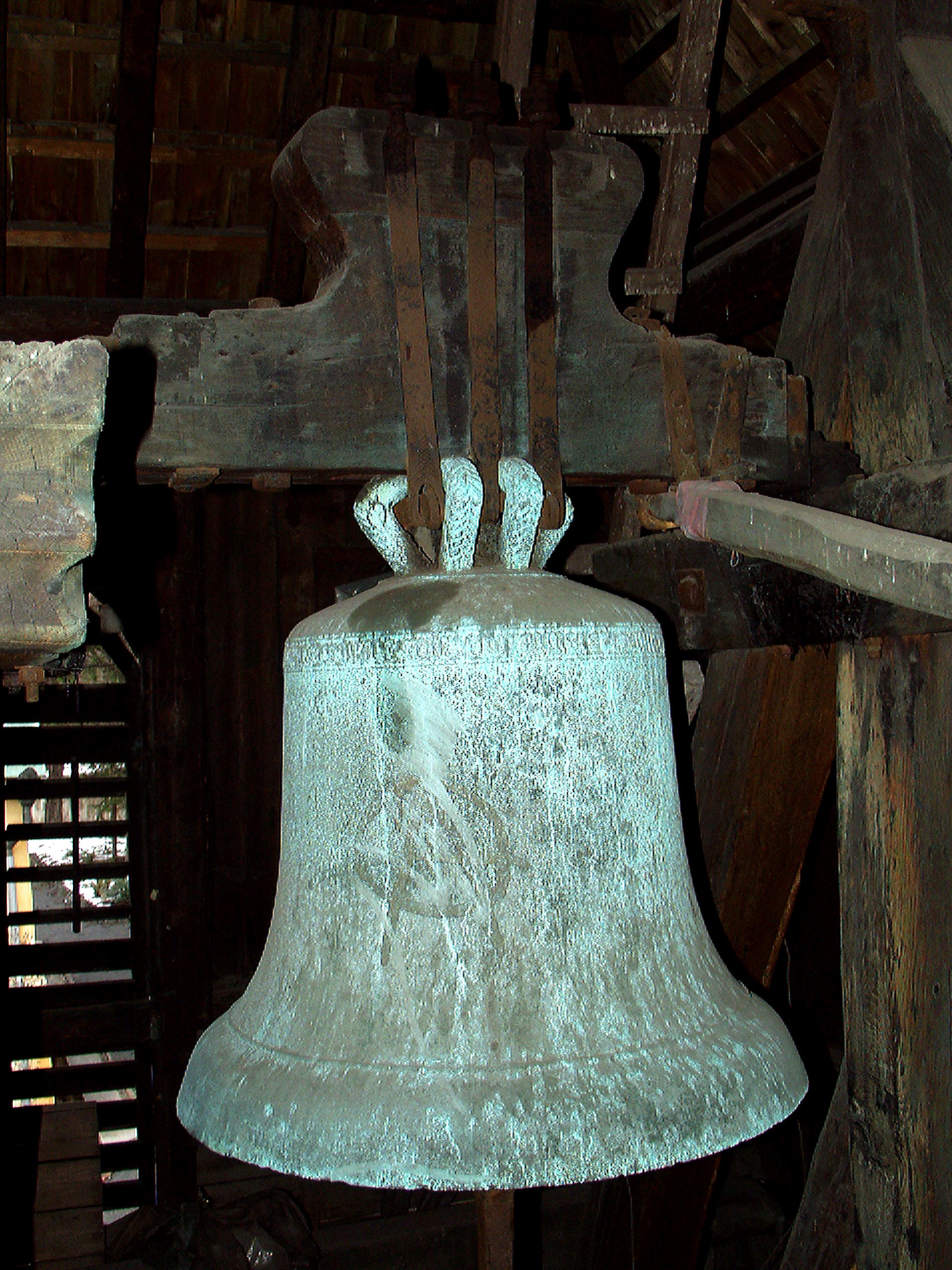
A historic bell hangs in it, the third oldest preserved bell in Prague, cast in 1482 by an unknown bell-maker; a minuscule inscription on the cap, enclosed by lines, states that it was cast in honor of the Mother of God and All Saints. (The bell is accessible during guided tours.) Two new bells, "Michael" and "John of Nepomuk" from the workshop of L. Tomášková-Dytrychová from Brodek near Přerov, were purchased for it in 1993.
A steep Gothic gable made of quarry stone has been preserved on the eastern side of the church nave, which is accessible during guided tours. The stone masonry of the gable shows traces of scorching by fire, which is also indicated by the remains of charred roof battens and oak pegs. At the foot of the gable is a low, oblong passage to the attic of the presbytery, set into a wider niche. The passage and the niche are covered on the east side by the original, charred plank lintel, dendrochronologically dated to the turn of 1273/74. Above the passage is a blinded slit window from the outside, of the early Gothic nave, with a slightly open bay window, originally topped with a plank lintel, of which only charred remains have survived. On the outside of the gable is a trapezoidal field of medieval plaster with remains of lime paint and fragments of wall paintings (also exceptionally accessible during guided tours). The clearing of pine and fir trunks for the construction of the new, still preserved roof over the nave of the church, which was acquired after the fire of the older roof (an inspection of the roof is part of the guided tour), is dendrochronologically dated to 1484 and 1485. The beams of the hambalk roof are carved from trees felled in the winter of 1559/60. The sanctuary tower on the ridge of the roof of the nave is dated on the western pillar with the original carpenter's inscription 15.10.1696 (made available as part of the guided tour). Around the church there was an old cemetery, where burials had been taking place since the Middle Ages (as proven by probes from 1972 near the southern side of the church presbytery). Some preserved tombstones from the cemetery, which was at the church from 1683 to 1885, are set into the wall around the church.
On the southern tympanum of the church, a Neo-Romanesque painting with the figures of Christ between two apostles on the road to Emmaus by Jan Jaroš has been preserved. The western facade of the church has an entrance highlighted by a portal with a semicircular tympanum, into which a mosaic with St. Archangel Michael by Jan Jaroš was additionally installed (marked: J. JAROŠ).
The main altar is Baroque, simple, the tabernacle and the center of the altar are of more recent origin. Above the altar is a smaller painting depicting the Archangel Michael in battle with a fallen angel.
Baroque oratory, wooden, from the 18th century - in the presbytery on the north side, with four glazed semicircular windows and a protruding breastwork, made of finely cut cones. The lower cornice is supported by four wooden consoles.
Baroque choir, wooden, from the 18th century, white-lacquered, supported by two Renaissance columns. Richly profiled cornice, slightly curved from the sides. Above the low center, a low gable ramp with volutes. Railings made of quadrilateral cones.
Marble baptismal font, Baroque from the 18th century, made of Sliven marble; on a profiled leg, a bowl with finely cut sun-shaped flutes. Height 98 cm, diameter of the bowl 64 cm.
At the southern entrance there is a Baroque, three-lobed font made of Sliven marble, the back wall of which is developed into a volute.
A pseudo-Renaissance, wall-mounted font, made of white-gray marble on a high leg, is to the left of the main entrance. On the shell of the tank there is a flute motif, on the stem, which narrows upwards, blunt flutes, at the lower end a palmette motif. Under the stem there is a foot, formed from five sides of an octagonal prism, graduated and profiled at the top. Signed below: G.CIANI. Giovanni Ciani, born 1847 in Lestan, Italy. He exhibited in Prague in 1897.
Open
Tuesday 14:30 - 16:00
Friday 14:30 - 16:00
Sunday 8:30 - 10:30
another day and hour - call - Tel: +420 731 322 746
Due to a tour of the church on another day and hour - call - Tel: +420 731 322 746 (Mr. Jindřich Trochta)
The nearest pilgrim sites
Visit these sites, too!
The nearest Accommodation
Relax here
The nearest Places of interest
Visit us!